Alright, let’s break this whole thing down together — because Oregon landlord-tenant law can feel like a giant maze when you’re trying to figure out what kind of notice to give, when you’re allowed to terminate a tenancy, and what a tenant can do if the landlord isn’t holding up their end of the agreement.
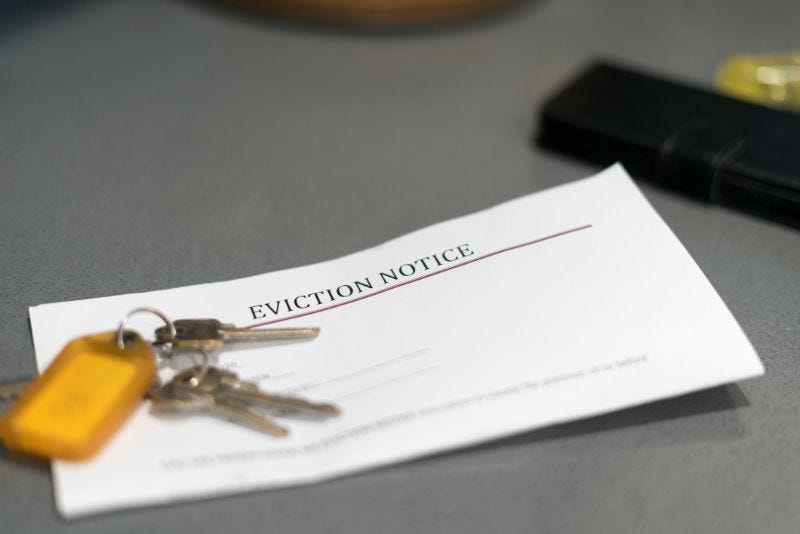
This guide is specifically for regular houses, apartments, condos, and rentals that are not manufactured homes, floating homes, or spaces inside manufactured home parks — those have a whole different set of rules.
Everything here comes from Oregon’s Residential Landlord and Tenant Act, but I’m going to walk you through it the way we’d talk about this in person, at a coffee shop, or during a consultation. The goal is: you fully understand the practical side of how rental terminations work in Oregon.
Let’s dig in.
PART 1: How Landlords Can Legally End a Tenancy in Oregon
Landlords basically have four paths to end a tenancy:
- Ending it because the tenant broke the rules (“for cause”).
- Ending it because rent wasn’t paid.
- Ending it immediately for serious or dangerous behavior.
- Ending it for no cause if it’s a periodic tenancy (like month-to-month).
Think of it like four different “tools” in the toolbox. The important part is knowing which tool fits which situation, because the timelines and rules change depending on the reason.
1. Ending a Tenancy Because the Tenant Broke the Rules (“For Cause”)
This is the situation where a landlord is basically saying:
“Hey, you broke the rental agreement in a serious way, and I need you either to fix it or move out.”
This applies when:
- The tenant damages the place,
- The tenant or their guests are creating health/safety issues,
- They’re violating the lease in a major way,
- They’re not paying required fees, utilities, or charges,
- They’re doing things the rental agreement specifically prohibits.
Here’s what the landlord has to do:
They have to serve a written 30-day notice that says:
- “Here’s the problem,”
- “Here’s the date your tenancy will end,”
- And, depending on the type of problem, the tenant usually gets a chance to fix it first.
Most of the time, the tenant gets 14 days to fix the issue.
So the notice usually says something like:
“You have 14 days to take care of this problem. If you fix it, the tenancy does not end. If you don’t fix it, your tenancy will end in 30 days.”
Examples of things a tenant can “cure” in 14 days:
- Clean up trash
- Stop a behavior
- Pay damages
- Remove unauthorized occupants
- Pay some past-due fees or utilities
But what if the tenant fixes it — and then does the same thing again?
Totally different rule.
If the tenant repeats the same problem within 6 months:
- The landlord can give a 10-day termination notice.
- No second cure opportunity is required.
This is Oregon’s way of saying:
“Okay, you fixed it once, but if you repeat the problem soon after, the landlord doesn’t have to go through the longer timeline again.”
Week-to-week rentals have shorter timelines.
If the tenant pays weekly, all the timelines shrink:
- 30 days → 7 days
- 14 days → 4 days
- 10 days → 4 days
This makes sense because weekly agreements move a lot faster.
2. Ending a Tenancy for Not Paying Rent
This is the one landlords deal with most often. Nonpayment notices have very specific timing rules in Oregon, and if you get the timing wrong, a judge will throw out the eviction case.
Here’s how the timing works:
Week-to-week rentals
- The landlord must wait until the 5th day of the rental week.
- Then they can give a 72-hour nonpayment notice.
All other normal rentals — like month-to-month or fixed-term leases
The landlord can choose between two notice types:
Option 1: 72-hour notice
- Can be given after the 8th day of the rental period.
Option 2: 144-hour notice
- Can be given after the 5th day,
- BUT this option is only legal if the rental agreement specifically allows it.
What must the notice say?
The notice has to include the exact date and time the tenant must pay by to stop the termination. If that information is missing, it’s not a valid notice.
What counts as “on time” when paying?
This gets a little tricky:
- If the notice was mailed, a payment is considered on time if the tenant mails it within the cure period.
- If the notice was hand-delivered, the rules are stricter — the tenant must pay exactly how the notice and rental agreement require.
3. Ending a Tenancy in 24 Hours for Serious Behavior
This is the “emergency eject button” in Oregon landlord-tenant law.
It’s for extreme situations — not just irritating ones.
A landlord can give a 24-hour termination notice for things like:
- A tenant (or their guest or their pet) threatens to injure someone.
- Actually injuring someone.
- Causing major property damage more than once.
- Doing something criminal or extremely inappropriate on the property.
- Someone unauthorized takes over the unit after the tenant leaves.
- Prostitution, burglary, intimidation, or drug manufacturing.
These are scenarios where the state basically says:
“We’re not going to make the landlord wait 30 days for this.”
Pet-related special rule:
If the problem is caused by a tenant’s pet, the tenant can fix it by removing the pet before the 24 hours ends.
But if the pet returns later?
The landlord can terminate again with 24 hours’ notice — no second chance this time.
4. Ending a Periodic Tenancy (“No Cause”)
This applies mostly to month-to-month rentals.
In Oregon, landlords can terminate a month-to-month tenancy without giving a specific reason, as long as they follow the proper rules.
Month-to-month
- Landlord must give at least 30 days’ written notice.
Week-to-week
- Landlord must give at least 10 days’ written notice.
Important note:
If the tenant lives in a rental house (not an apartment) and the landlord plans to move in or have a family member move in, there may be additional rules — especially in Portland or other rent-controlled jurisdictions — but those aren’t covered here since this explanation is for the statewide rules.
PART 2: How Tenants Can Legally End a Tenancy in Oregon
Tenants actually have a lot of rights when it comes to terminating a tenancy — especially if the landlord isn’t maintaining the home or doing things that are illegal.
Here are the main ways a tenant can end a tenancy:
- The landlord isn’t complying with the rental agreement or habitability laws.
- The landlord isn’t providing essential services.
- The landlord locks the tenant out or cuts services.
- The unit is condemned or unsafe.
- The tenant receives military service orders.
Let’s walk through each one.
1. Ending the Tenancy Because the Landlord Isn’t Maintaining the Home
If the landlord fails to keep the place habitable — meaning safe, functional, and up to basic standards — the tenant can legally start the termination process.
Here’s what the tenant does:
They give the landlord a written notice saying:
- What the problem is,
- That the landlord needs to fix it,
- And that the rental agreement will end on a certain date if the landlord doesn’t fix it.
Time the landlord gets to fix the problem:
- 7 days if the issue involves an essential service
(think heat, water, electricity — things you absolutely need). - 30 days for everything else
(repairs, maintenance, broken appliances, etc.).
If the landlord does fix the problem within the allowed time, the tenancy continues.
If they don’t, the tenancy ends.
Repeat problem rule
If the same issue happens again within 6 months, the tenant can end the tenancy with:
- 14 days’ notice
- Or 7 days for week-to-week rentals.
2. Landlord Fails to Provide an Essential Service (and It’s Dangerous)
This is different from the regular repair rule above. This rule applies when:
- The landlord is failing to provide an essential service AND
- That failure creates a serious, immediate threat to the tenant’s health or safety.
Example:
- No heat during freezing weather.
- No running water.
- No power for days with no reasonable justification.
What the tenant does:
Gives the landlord a notice saying:
“You have 48 hours to fix this or I’m ending the tenancy.”
If the landlord still doesn’t fix the problem — the tenant can move out.
3. Tenant Can End the Tenancy If the Landlord Locks Them Out or Cuts Utilities
This is a big one.
In Oregon, landlords cannot:
- Lock tenants out,
- Remove doors,
- Take tenants’ belongings,
- Shut off heat, water, or electricity on purpose,
- Reduce services intentionally to force the tenant out.
If any of that happens, the tenant can:
- End the rental immediately,
- And sue the landlord for damages worth either two months’ rent or twice their actual damages — whichever is bigger.
This is Oregon’s way of saying:
“You don’t get to bully a tenant out of their home.”
4. Ending the Tenancy When the Unit Is Condemned or Unsafe
If a government agency comes in and says:
“This home is unsafe or illegal to live in,”
then the tenant can immediately end the tenancy by telling the landlord.
And they do not owe rent going forward.
5. Ending the Tenancy Due to Military Service
Tenants who receive military orders can end a rental agreement early as long as they provide:
- Written notice,
- And proof of their orders.
This applies when:
- They are entering active service,
- They are being assigned elsewhere for 90+ days,
- Or they are finishing service and moving out of the area.
The timing of termination depends on the federal Servicemembers Civil Relief Act, but generally it ends:
- About 30 days after notice,
- Or around 30 days before the report date.
The important part:
The tenant doesn’t owe rent after the effective termination date.
PART 3: General Rules That Apply to All Terminations
No matter who is ending the tenancy or why, there are a few universal rules you should know.
Fixed-term leases end automatically
If you have a lease that runs from (for example) June 1 to May 31, it simply ends on May 31. No additional notice is required unless the lease says otherwise.
What happens if the tenant stays after the termination date?
This is called being a holdover tenant, and landlords can:
- File for possession,
- And recover damages, including rent for the time the tenant stayed past the end date.
When is possession officially “returned” to the landlord?
Possession is considered returned when:
- The tenant gives back keys,
- Or tells the landlord they’re out,
- Or the landlord reasonably believes the unit is abandoned after the notice expires.
Landlord waivers
If a landlord accepts rent after a known violation, Oregon may consider that a waiver of the landlord’s right to terminate for that violation.
Usually this happens when:
- The landlord accepts rent during two rental periods
- And knows there is a current violation
Unless the landlord refunds the rent within six days, they may lose their right to act on that specific breach.
When does a tenant stop owing rent?
A tenant owes rent only until one of these happens:
- The termination notice expires,
- The lease ends,
- The unit is re-rented,
- OR
- 30 days after returning possession (for month-to-month),
- 10 days after returning possession (for week-to-week),
whichever comes first.
Wrapping it Up
So when you put all of this together, here’s the big picture in a simple, human way:
Landlords have structured ways to end a tenancy, depending on whether it’s for cause, for unpaid rent, for dangerous behavior, or for no reason at all.
Tenants have their own set of rights to end a tenancy when the landlord isn’t holding up their end of the bargain — especially when safety, habitability, or illegal landlord behavior comes into play.
Both sides have responsibilities. Both sides have protections. And almost every situation has a specific timeline that needs to be followed exactly or the whole thing becomes invalid.
It’s a dance — and the law expects both sides to move in a very specific rhythm.
📣 Need Expert Guidance on Oregon Landlord Laws, Property Management, or Your Rental Portfolio?
My name is Parker Vernon, and I’ve spent more than a decade helping Central Oregon landlords, investors, and homeowners protect their assets, navigate Oregon’s complex housing laws, and grow long-term real estate wealth.
I’m not just a broker — I’m a lifelong Central Oregon local, a seasoned property manager, and a dedicated advocate for rental housing. I also serve as a Board Member for the Central Oregon Rental Owners Association (COROA), where I work directly with industry leaders, policymakers, and housing providers to ensure landlords have the education, support, and resources they need to run successful rental businesses.
Whether you’re managing a single-family rental, building a portfolio, or trying to understand Oregon’s ever-changing landlord-tenant laws, I’m here to help.
👉 If you have questions about your rental, want a portfolio review, or need guidance on compliance, reach out any time.